
Inland aquaculture in Southeast Asia faces a persistent and costly problem: water loss through permeable subgrades. In Indonesia’s growing fish farming sector, earthen ponds are common, but their performance is unreliable. Depending on soil conditions, water can seep away continuously, forcing farmers to pump constantly to maintain depth and water quality. This drives up electricity costs and creates unstable conditions that stress fish and reduce yields.
This is a fish pond project we finished by HDPE geomembrane lining in Buhut Jaya, Indonesia, completed in 2025. The project demonstrates how a relatively thin but properly specified geomembrane can transform a leaky earthen pond into a reliable, controllable production asset.
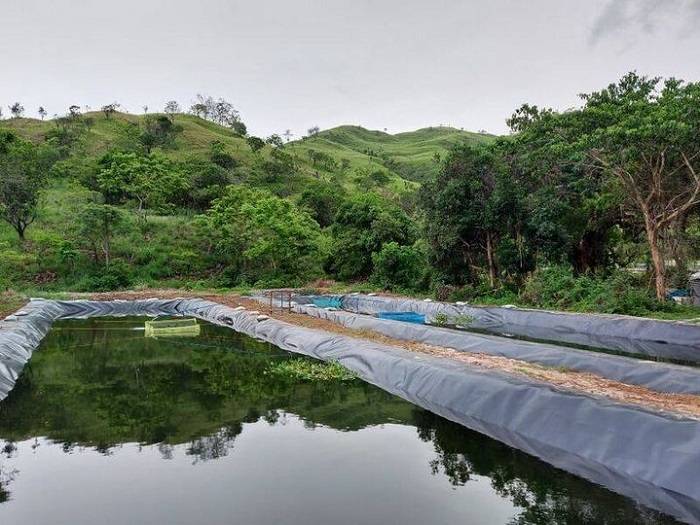
Traditional open-air fish farms always face certain problems: uncontrolled seepage, water quality instability, waste accumulation and ammonia risk, tropical Weather and UV exposure, practical installation constraints...
Solution Design
Material Selection: 1.0 mm HDPE Geomembrane
For the Buhut Jaya project, 1.0 mm HDPE geomembrane was selected as the lining material . This thickness represents a practical balance for aquaculture applications in the region:
-
Sufficient puncture resistance: 1.0 mm HDPE provides a puncture strength of at least 320 N under standard testing, adequate to resist damage from typical subgrade irregularities when properly prepared .
-
UV stabilization: The material contains carbon black at 2.0–3.0%, providing the necessary protection against tropical sunlight .
-
Chemical inertness: HDPE is non-reactive with water and does not leach chemicals that could affect fish health.
-
Flexibility for installation: While thicker than 0.5 mm or 0.75 mm liners, 1.0 mm remains workable for manual deployment and welding on medium-sized ponds.
A thinner liner (0.5–0.75 mm) could have been considered for cost reduction, but 1.0 mm offers better long-term durability against mechanical damage during cleaning and maintenance—a worthwhile investment for a production asset expected to operate for multiple years .
This solution can apply to fish ponds, shrimp farms, and water storage reservoirs across tropical Southeast Asia, where high temperatures, intense UV exposure, and variable soil conditions demand a liner that is both durable and practical to install.
Installation Approach
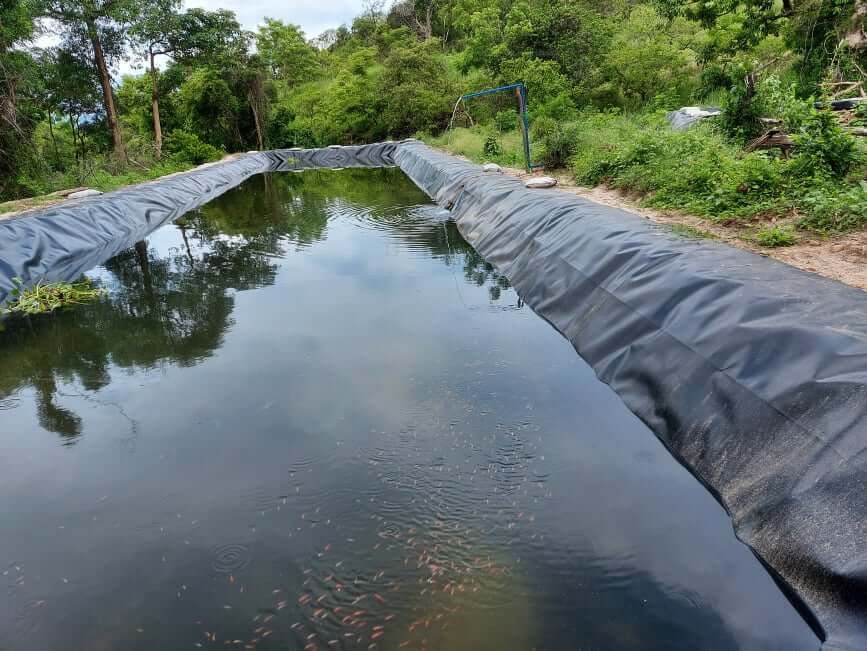
The installation followed standard aquaculture geomembrane practice adapted to local conditions:
Operational Improvements
1. Water Retention and Cost Savings
2. Stable Water Chemistry
3. Improved Waste Management
4. Easier Harvest and Cleaning
Key Takeaways for Similar Projects
For more information on our HDPE geomembrane product range for aquaculture applications, including 1.0 mm and 1.5 mm specifications with UV stabilization, please visit wordmaterial.com or contact our technical team.