
Introduction
Geocell and geogrid are both geosynthetic reinforcement systems used to improve soil stability, but they serve fundamentally different engineering purposes. The question “geocell vs. geogrid” is not about which one is better—it's about understanding that they do completely different jobs. Geocells confine soil at the surface in three dimensions. Geogrids reinforce soil internally through tensile strength in a single plane.
Choosing the wrong system can lead to premature failure and higher long-term costs. This guide explains the key differences and provides a practical framework for selecting the right solution for your specific project conditions.
What Is a Geogrid?
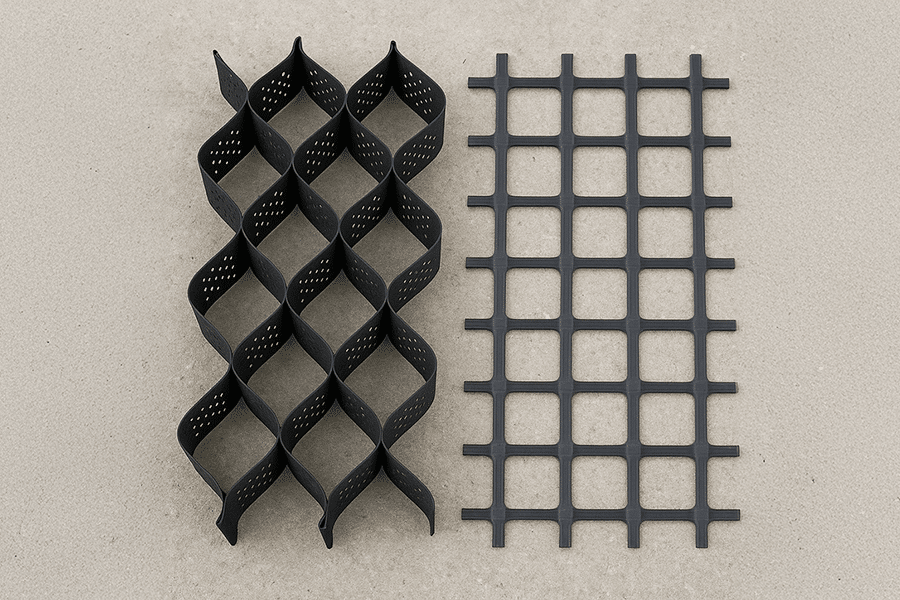
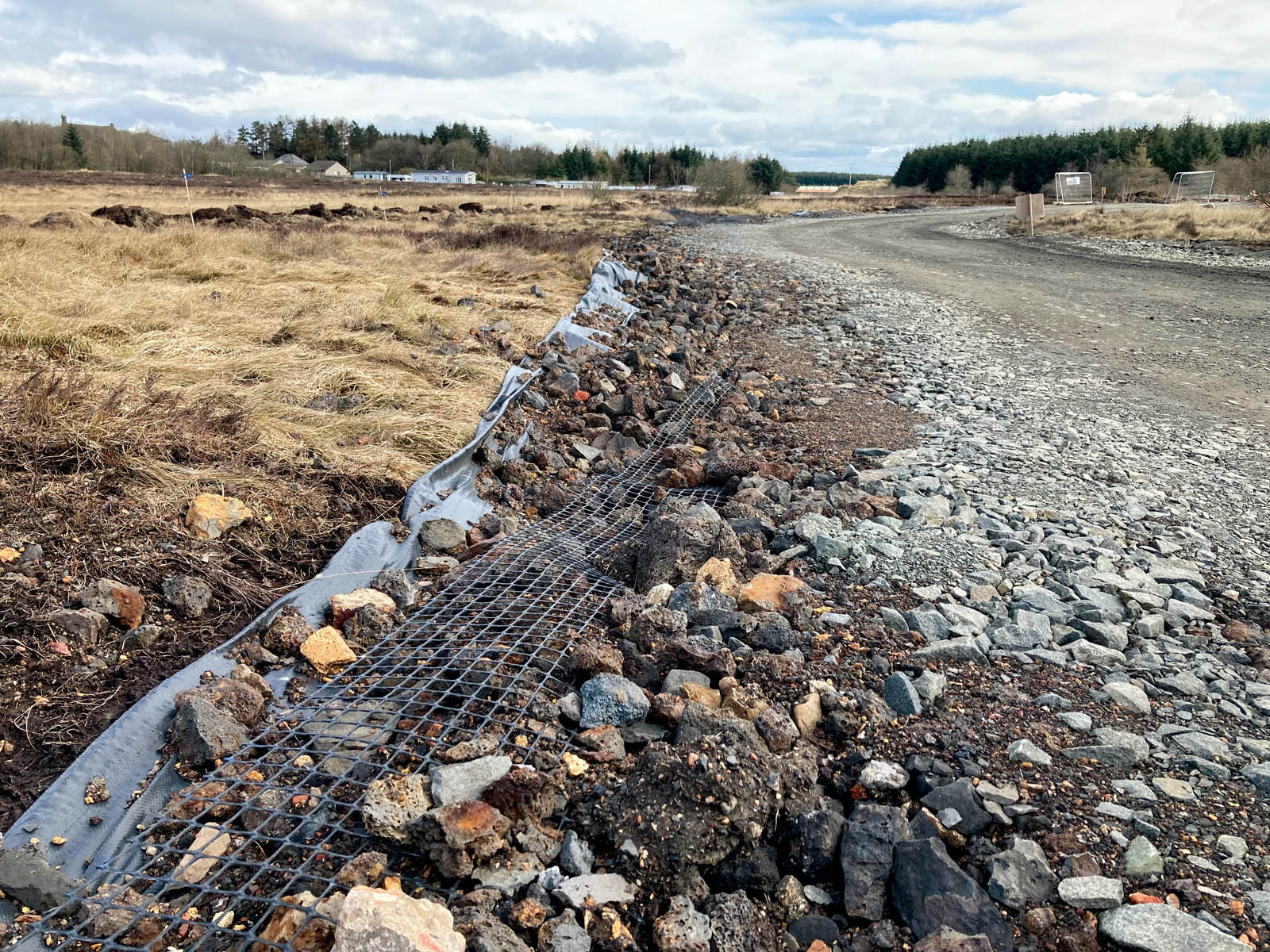
A geogrid is a planar open-grid reinforcement material—typically made of polyester, polypropylene, or HDPE—placed within compacted soil or aggregate layers. The grid ribs interlock with surrounding material to carry tensile forces that the soil itself cannot resist.
How It Works
Geogrids work through tensile reinforcement and soil–aggregate interlock. When embedded in a soil or aggregate layer and compacted, the geogrid ribs interlock with the fill material, creating a composite structure that resists deformation. This tensile capacity allows road bases to carry heavy axle loads without requiring thicker structural layers, and enables mechanically stabilized earth (MSE) walls to remain vertical.
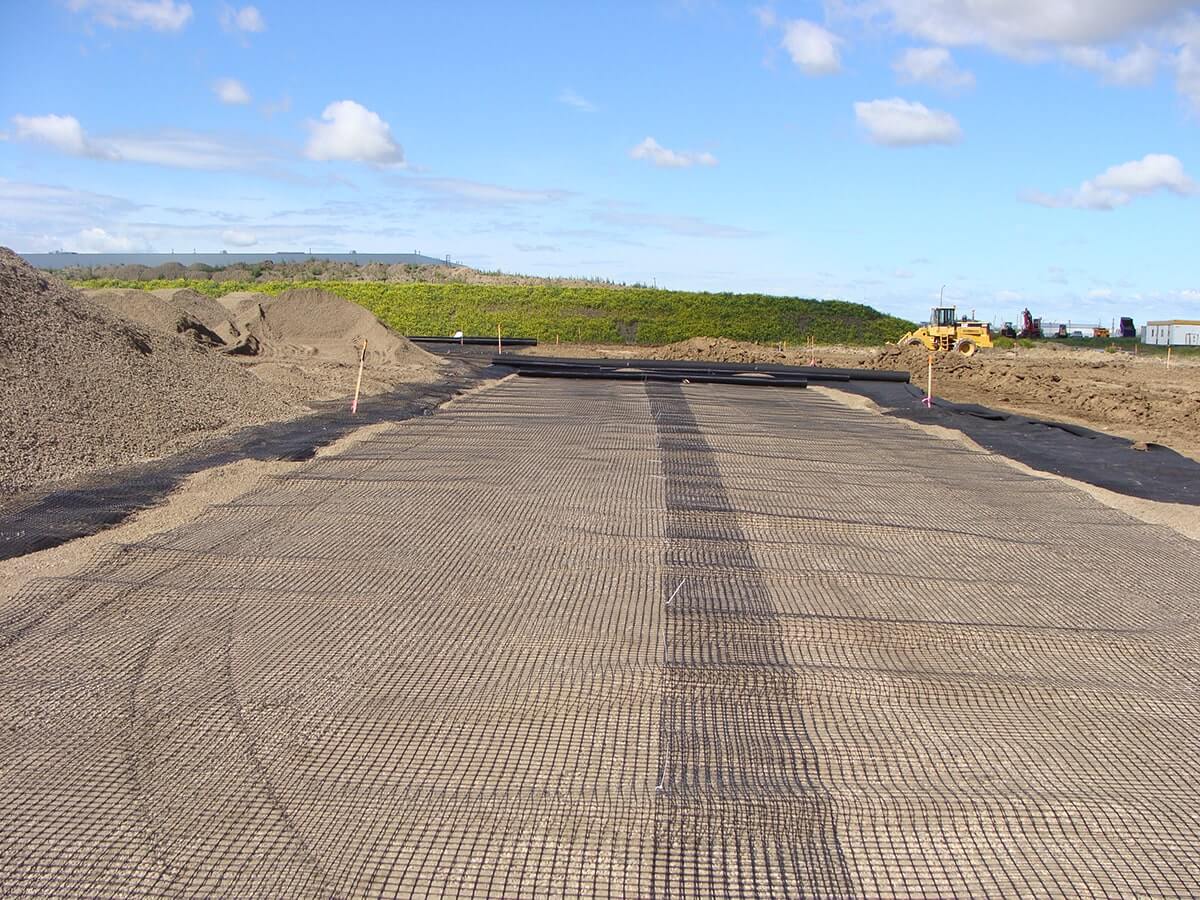
Structure: Two-dimensional planar grid with defined apertures and junctions
Mechanism: Tensile reinforcement; improves shear strength and limits lateral soil movement
Best suited for: Medium to high bearing soils where tensile reinforcement can be fully mobilized
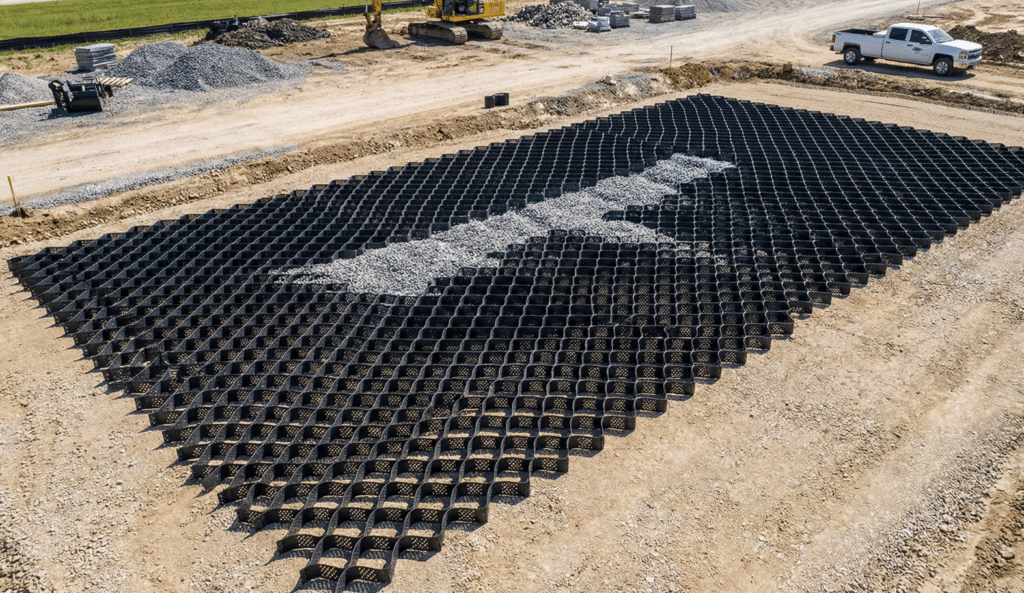
A geocell is a three-dimensional honeycomb confinement system made from welded HDPE strips. Transported in a collapsed state, it is expanded on-site into a cellular mattress, then filled with soil, sand, or aggregate.
Geocells work through three-dimensional lateral confinement. The cell walls confine the infill material, preventing it from spreading under load or washing away on slopes. This confinement creates a stiff, load-bearing composite layer that significantly increases bearing capacity and deformation resistance.
Mechanism: Lateral confinement + load distribution; creates a “beam-slab” effect
Best suited for: Soft, loose, or weak subgrades and low-bearing-capacity foundations
Key Characteristics
Primary Applications
What Is a Geocell?
How It Works
Key Characteristics
Primary Applications
Head-to-Head Comparison
Choose geogrid when your project requires structural reinforcement and the soil has sufficient bearing capacity to mobilize tensile forces.
Road base and subgrade stabilization — Geogrids improve load distribution and reduce deformation in road construction
Reinforced soil slopes — Geogrids provide internal tensile reinforcement for stable slope construction
Retaining wall systems — MSE walls rely on geogrid layers to anchor the reinforced soil mass
Weak subgrade reinforcement — When the subgrade is stable enough to support geogrid installation
Construction platforms — Where the ground is stable but tensile capacity is insufficient
The soil has medium to high bearing capacity
Choose geocell when your project requires surface stabilization or when dealing with extremely soft soils.
Slope protection and erosion control — Geocells confine surface material, preventing erosion and slope failure
Load support over very soft soils — Geocells create a stiff mattress that distributes loads over weak subgrades
Heavy-load pavements — Geocells improve bearing capacity under heavy loads
Embankment foundation reinforcement — Geocells reduce settlement and improve stability
Studies have demonstrated that, under the same technical requirements, geocell reinforcement is superior to geogrid in controlling settlement and lateral displacement. A single layer of geocell placed on a subgrade has been found to outperform both single- and double-layer geogrid cases under all conditions studied. In railway applications, geocell reinforcement reduced embankment settlement by approximately 29.71% compared to geogrid-reinforced bedding. Geocells also perform better than geogrids in terms of load transfer, reducing vertical stress and restricting overall settlement.
When to Choose Geogrid
Best Use Cases:
Choose Geogrid If:
When to Choose Geocell
Best Use Cases:
You need to use locally available or marginal fill materials
The project involves slopes steeper than approximately 1:2 (vertical:horizontal)
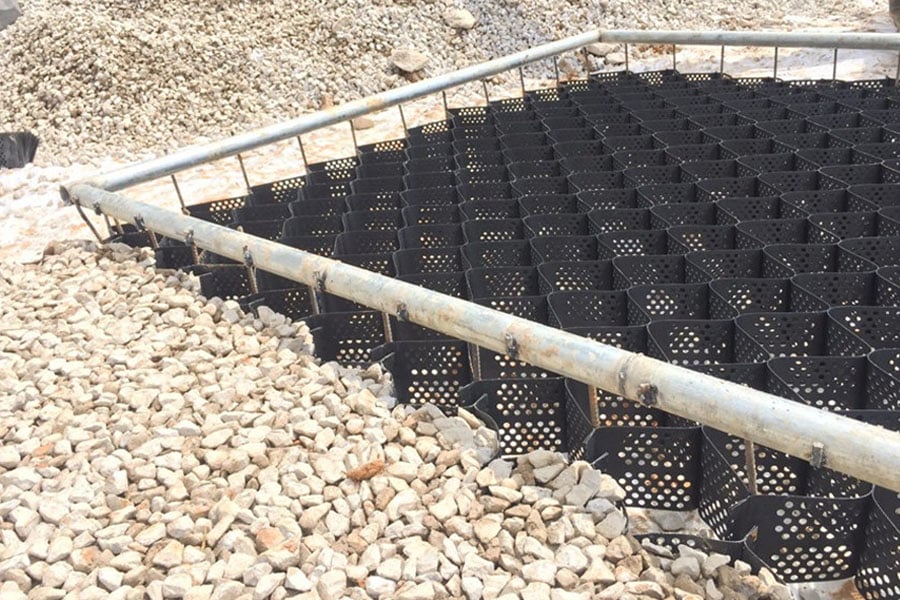
For slope protection applications where the slope is steeper than about 1:2, textured/perforated geocells are recommended—the texture increases friction with the infill material, while perforations allow root penetration and water passage between cells. For flatter terrain and lighter loads, smooth HDPE geocells provide the same confinement at lower cost.
Using geocell for structural reinforcement — Geocells are designed for surface confinement, not deep tensile reinforcement
Using geogrid where surface erosion is the main issue — Geogrids must be buried to work; they do not prevent surface erosion
Ignoring drainage conditions — Poor drainage can undermine any reinforcement system
Choosing based only on cost instead of performance — The wrong selection leads to premature failure and higher long-term costs
Not fully expanding geocells — An unexpanded geocell forces a single cell to bear the entire load instead of distributing it across the whole mattress
Using geogrid on extremely soft soils — Geogrids require bearing capacity to mobilize tensile forces; in very soft ground, geocells are often the better choice
Yes. In many projects, geogrid and geocell can even be used together. A common combined approach uses 2 layers of geocell at the bottom + 1 layer of geogrid at the top for optimal performance. Research on widened embankments has shown that combining multiple reinforcement layers—with geocell at the base and geogrid near the surface—provides the best control of both settlement and lateral displacement. This layered approach leverages the surface confinement of geocells with the tensile reinforcement of geogrids.
There is no universal “better” solution between geocell and geogrid. The correct choice depends entirely on:
Soil conditions — Is the soil soft or medium-strength?
Load requirements — What magnitude and duration of loading is expected?
Project type — Road construction? Slope protection? Retaining wall?
Surface conditions — Flat or sloped? Erosion risk?
Bottom line: Choose geogrid when you need structural tensile reinforcement for roads, slopes, or retaining walls on stable ground. Choose geocell when you need surface stabilization, erosion control, or load support over very soft soils. And when both needs exist, consider using them together for optimal performance.
For more information on our geogrid and geocell product ranges, or technical support for your specific project, please visit wordmaterial.com or contact our engineering team.
Choose Geocell If:
Surface Texture Considerations
Common Mistakes to Avoid
Can They Be Used Together?
Quick Selection Guide
Conclusion