
The critical requirement was environmental protection. Without a reliable barrier, effluent could migrate through the soil and contaminate groundwater. Brazilian environmental regulations demanded a containment solution that would protect both soil and water resources while ensuring the treatment process could function effectively.
Solution Design
Material Selection: 1.5 mm HDPE Geomembrane
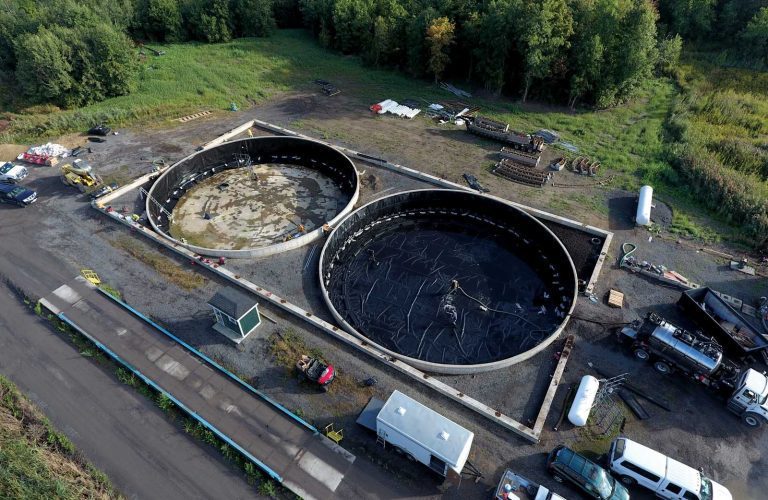
For the new treatment lagoon, 1.5 mm HDPE geomembrane was selected as the lining material . This thickness is a standard choice for industrial wastewater containment in Brazil, offering a balance of chemical resistance, mechanical durability, and installation practicality.
The material was specified to meet local environmental requirements, providing:
-
A reliable barrier against effluent migration
-
Resistance to the chemical composition of the mixed industrial and sanitary effluent
-
Sufficient mechanical strength to withstand installation and service conditions
Installation Approach
The installation followed standard HDPE geomembrane practice for wastewater lagoons:
Step 1: Subgrade Preparation
The lagoon base and side slopes were prepared to provide a smooth, stable bedding surface. Sharp objects, roots, and debris were removed, and soft areas were addressed before liner deployment.
Step 2: Liner Deployment
The geomembrane panels were positioned and unrolled across the lagoon geometry. Care was taken to minimize wrinkles and allow the material to conform to the subgrade without excessive tension.
Step 3: Seam Welding
Panel overlaps were joined using thermal fusion welding. This method produces seams that can be tested for integrity, ensuring the liner functions as a continuous barrier.
Step 4: Completion
The liner was secured around the lagoon perimeter, and any penetrations or connections were sealed.
Results & Benefits
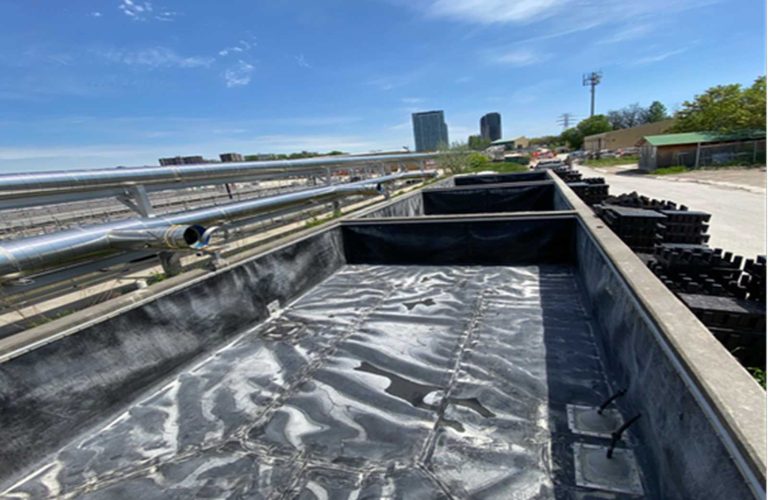
The lined lagoon successfully met the facility’s operational and environmental requirements. The 1.5 mm HDPE geomembrane provided the necessary barrier to protect soil and groundwater while allowing the expanded effluent treatment process to function as designed .
Key Takeaways for Similar Projects
1. Thickness selection should match the effluent aggressiveness.
For mixed industrial and sanitary effluent, 1.5 mm HDPE provides a robust barrier. Thinner liners may be adequate for less aggressive streams, but industrial applications typically warrant the extra durability margin.
2. Subgrade preparation remains critical.
Regardless of liner thickness, puncture damage from inadequate subgrade preparation is a leading cause of failure. Thorough clearing and compaction before deployment is essential.
3. Thermal fusion welding provides verifiable seam integrity.
Double-track wedge welds allow air-pressure testing of the seam channel, providing confidence in the liner’s continuity before the lagoon is put into service.
4. Environmental compliance drives material specification.
In markets with strict environmental oversight, specifying a proven liner system is not optional—it is a prerequisite for project approval and operation.
Conclusion
The Schincariol wastewater lagoon project demonstrates that 1.5 mm HDPE geomembrane is a practical, reliable solution for industrial effluent containment in Brazil. The material provided the necessary barrier to protect soil and groundwater, met environmental requirements, and supported the facility’s expanded production capacity.
For suppliers serving the Latin American industrial and municipal wastewater market, this case illustrates the importance of matching liner thickness to effluent conditions and ensuring proper installation practices—particularly seam quality and subgrade preparation—to deliver a containment system that performs over the long term.
For more information on our HDPE geomembrane product range for wastewater containment applications, including 1.5 mm and 2.0 mm specifications, please visit wordmaterial.com or contact our technical team.