
Engineering Challenge
Modern sanitary landfills face a set of demanding technical requirements that make containment design critically important:
1. Leachate Containment
Leachate generation is inevitable during waste decomposition. Without proper lining, this toxic liquid can percolate through soil layers and reach groundwater aquifers, creating contamination plumes that are costly and difficult to remediate. The containment system must exhibit extremely low permeability—typically in the range of 1×10⁻¹³ cm/s or lower for HDPE geomembranes.
2. Chemical Resistance
Landfill environments are chemically aggressive. Leachate contains a complex mixture of organic acids, inorganic salts, and heavy metals. The liner material must resist degradation from contact with leachate across a wide pH range, maintaining its barrier properties throughout the landfill’s operational life and post-closure period.
3. Mechanical Durability
Installation subjects the liner to significant stress: heavy equipment traffic, stone placement, waste compaction, and settlement of the waste mass over time. The liner must have sufficient tensile strength, puncture resistance, and tear resistance to survive installation without compromising its barrier function. Textured surfaces are often specified on slopes to prevent slippage and maintain frictional stability .
4. Long-Term Performance
Landfill liners are designed for service lives measured in decades, with some applications requiring performance over 50 years or more. The material must resist aging, oxidation, and environmental stress cracking—degradation mechanisms that can compromise containment over time. Studies have shown that HDPE geomembranes can generate microplastics through aging processes, particularly at elevated temperatures , making material quality and formulation critical for long-term environmental performance.
5. Regulatory Compliance
Many jurisdictions require certified liner systems meeting national or regional standards. For example, German landfills require BAM (Federal Institute for Materials Research and Testing) certification for sealing system components . The liner must demonstrate compliance through rigorous testing and quality assurance protocols.
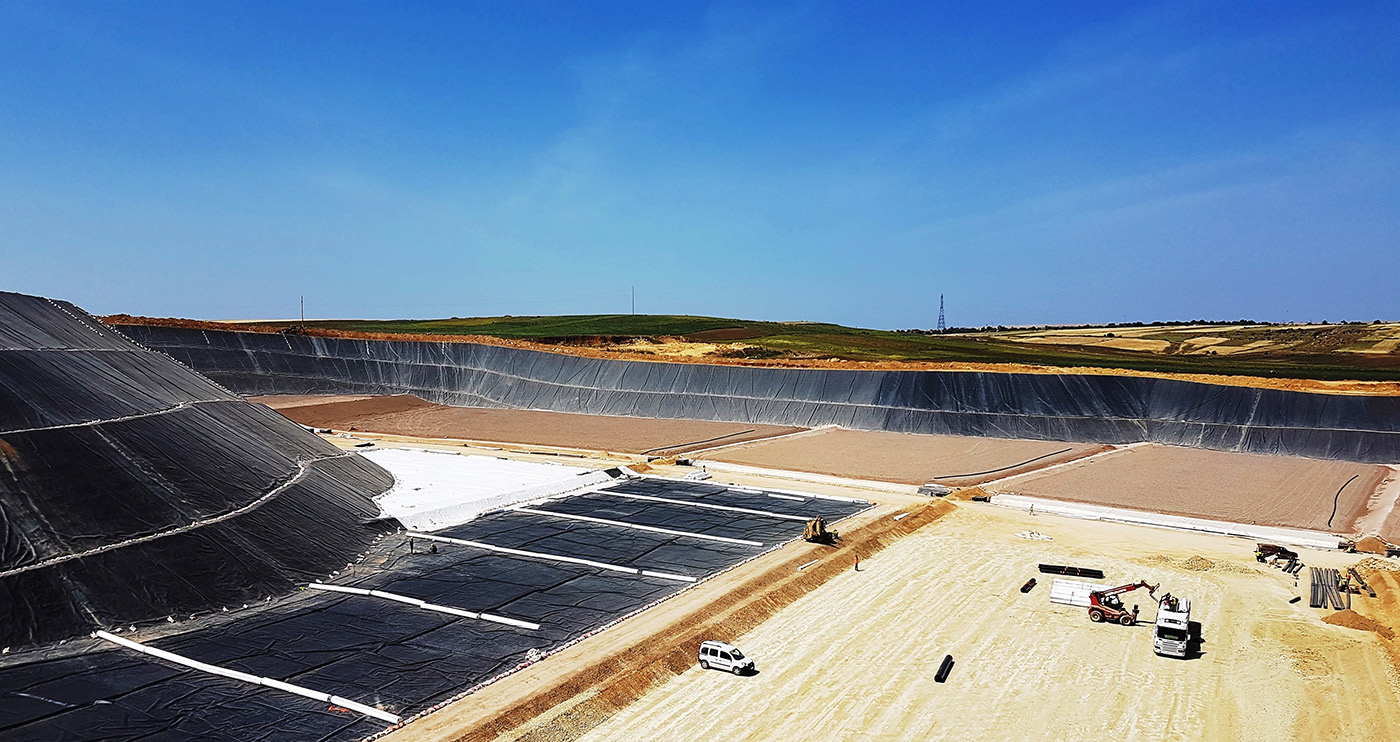
Our Solution: HDPE Geomembrane Liner System
For landfill containment applications, our HDPE geomembrane provides a proven, cost-effective barrier solution. The material is manufactured from high-quality polyethylene resin with additives for UV resistance, oxidation stability, and processing performance.
Recommended Specifications
Installation Best Practices
Based on documented industry practice from successful projects :
-
Subgrade Preparation: The base surface is leveled and compacted to provide a uniform, smooth foundation free of sharp objects.
-
GCL Installation (for composite systems): Geosynthetic Clay Liner is rolled out as the secondary barrier layer.
-
Primary Liner Installation: HDPE geomembrane panels are laid, overlapped, and seamed using thermal welding equipment. Seam quality is verified through both nondestructive (air pressure) and destructive testing .
-
Drainage Layer: A geocomposite or drainage layer is installed above the liner to collect and remove leachate and reduce hydraulic pressure on the liner system .
-
Protective Layer: Geotextile or other protective materials are placed above the drainage layer to prevent damage from overlying waste or cover materials.
-
Phased Installation: Installation is often completed in phases to prevent extended exposure of the composite system to weather conditions .
Quality Assurance
Ensuring liner integrity requires rigorous quality control (QC) and quality assurance (QA) throughout installation. As emphasized by industry experts, proper welding procedures, certified installers, and systematic quality control are essential for ensuring long-term performance . Key QA elements include:
-
Destructive seam testing: Sample seams are cut and tested for peel and shear strength
-
Non-destructive testing: Air pressure, vacuum, or spark testing of field seams
-
Material traceability: Every roll is tracked for conformance to specifications
-
Third-party inspection: Independent verification of installation quality
Real-World Application
Multiple projects demonstrate the effectiveness of this approach:
-
Bacolod Sanitary Landfill, Philippines: A dual-liner system using GCL and 1.5mm HDPE geomembrane was supplied to provide leachate containment and environmental protection .
-
Schwanebeck Landfill, Germany: A multi-layer surface sealing system using 2.5mm GSE HD geomembrane and FABRINET drain composite was installed, certified to BAM standards for long-term environmental protection .
-
Florida Landfill Expansion: Over 1.7 million square feet of textured 60-mil HDPE liner was installed as part of a multi-layer geosynthetic containment system .
-
Homer Solid Waste Facility, Alaska: Facing steep gradients, poor sub-surface conditions, and sub-arctic climate, Solmax supplied GCL, FABRINET geocomposite, and 1mm double-textured geomembrane to successfully complete the closure .
Conclusion
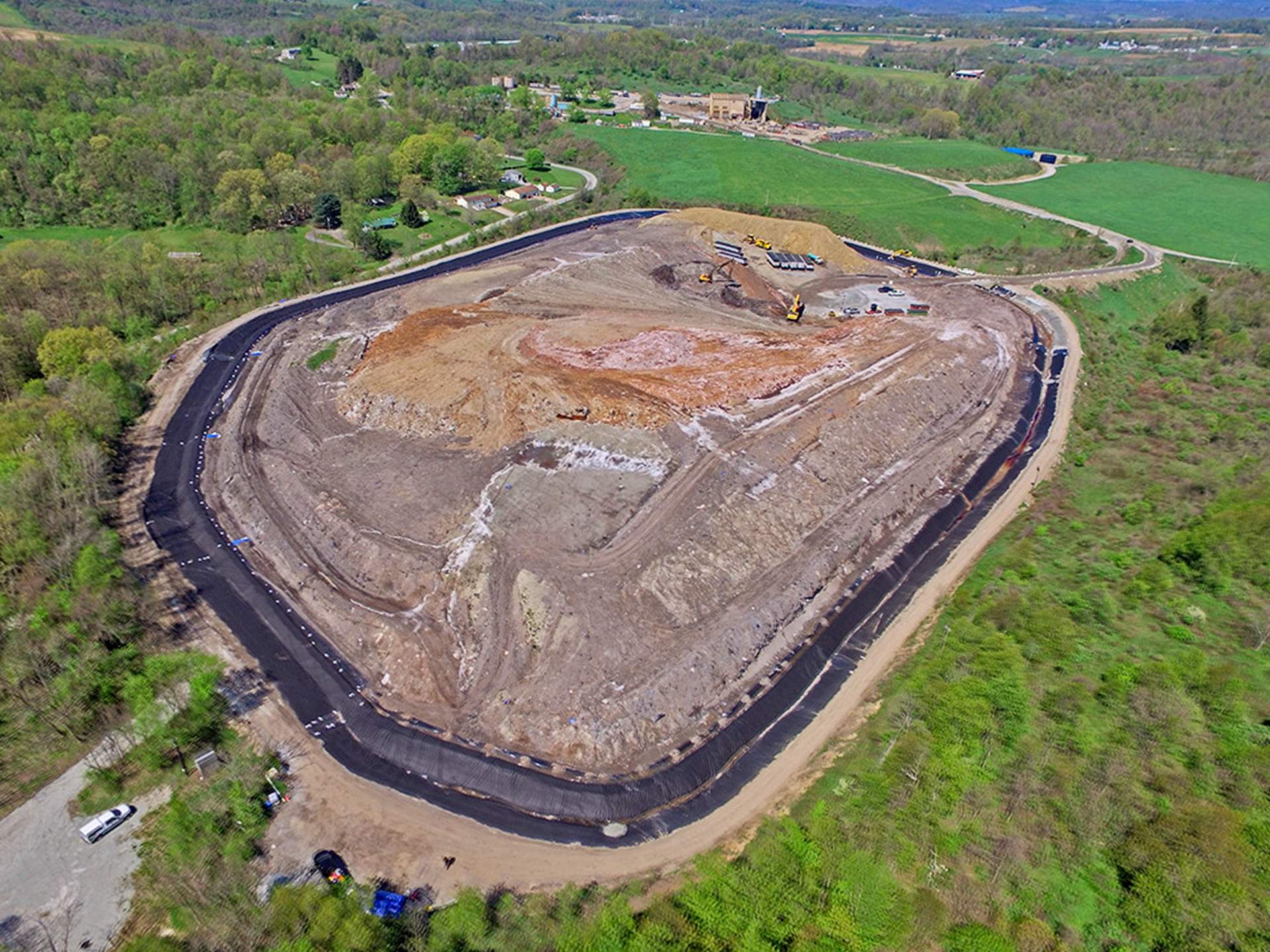
HDPE geomembrane is an essential component of modern sanitary landfill lining systems. Its combination of low permeability, chemical resistance, mechanical strength, and installation practicality makes it the material of choice for environmental containment applications worldwide.
As waste management regulations become increasingly stringent and engineering demands grow, the role of high-quality HDPE geomembranes in protecting groundwater and public health remains more critical than ever. The documented success of projects employing HDPE liner systems—from tropical Philippines to sub-arctic Alaska—demonstrates the technology’s adaptability and proven performance across diverse environmental conditions.
For more information on our HDPE geomembrane products and engineering support services, please visit wordmaterial.com or contact our technical team.