HDPE Geomembrane Thickness Range
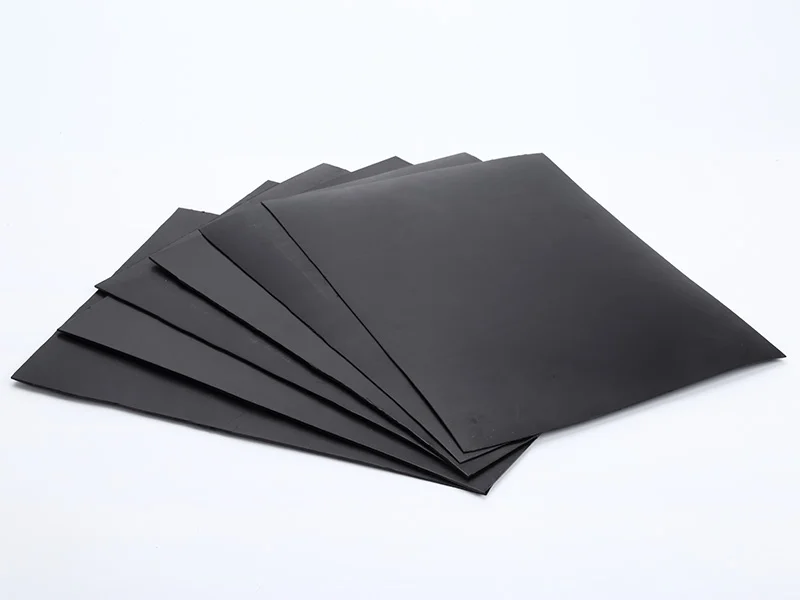
HDPE geomembranes are typically manufactured in thicknesses ranging from 0.3 mm to 3.0 mm . The most common options and their general applications are :
| Thickness | mil equivalent | Typical Applications |
|---|---|---|
| 0.3 – 0.5 mm | 12 – 20 mil | Light-duty aquaculture, temporary covers, horticulture |
| 0.75 mm | 30 mil | Small irrigation ponds, secondary containment |
| 1.0 mm | 40 mil | Reservoirs, aquaculture ponds, landfill capping |
| 1.5 mm | 60 mil | Municipal landfill liners, wastewater treatment |
| 2.0 mm | 80 mil | Mining tailings, hazardous waste, heavy traffic zones |
| 2.5 – 3.0 mm | 100 – 120 mil | High-risk hazardous containment, extreme conditions |
Thickness by Application
0.3 mm – 0.5 mm: Light-Duty and Low-Risk Applications
Geomembranes in this range offer high flexibility, easy installation, and low cost, making them suitable for light-load scenarios where mechanical pressure and puncture risks are minimal .
Applications:
-
Small-scale aquaculture ponds, lotus ponds, ornamental ponds
-
Horticultural soil impermeability, small irrigation ditches
-
Temporary construction site waterproofing and storage pits
Limitations: Low puncture resistance and tensile strength. Should avoid contact with sharp objects such as stones and tree roots. Additional protective layers may be required .
0.75 mm – 1.0 mm: General-Purpose Containment
This range strikes a balance between flexibility and durability, offering better puncture resistance and tensile strength than thinner options. It is the most widely used thickness range for general impermeability projects .
Applications:
-
Commercial aquaculture ponds, fish and shrimp farms
-
Medium-sized irrigation reservoirs (water depth ≤ 1.5 m)
-
Road and railway subgrade anti-seepage and isolation
For most professional aquaculture projects, 1.0 mm geomembranes are preferred for their optimal balance of cost and durability .
Key consideration: For uneven ground conditions or rough subgrades, upgrading to 1.0 mm or adding a protective geotextile cushion improves durability .
1.5 mm: The Workhorse for Landfills and Industrial Containment
The 1.5 mm (60 mil) HDPE geomembrane is the industry standard for municipal solid waste landfill liners . It is the workhorse for landfill caps, leachate ponds, and industrial containment, offering a 20-year-plus design life .
Applications:
-
Municipal solid waste landfill bottom liners and caps
-
Wastewater treatment ponds
-
Industrial containment basins
Regulatory context: Many jurisdictions globally use 60 mil HDPE as a practical baseline for municipal landfill liners because 1.5 mm material supports consistent seam welding and provides a defensible level of mechanical robustness under waste loading . U.S. EPA-related guidance and industry summaries commonly reference 60 mil HDPE for flexible membrane liners in municipal solid waste applications .
Thinner liners are generally not recommended for landfill applications due to the high puncture risks and environmental liability involved .
2.0 mm: High-Stress and Hazardous Environments
When the stakes are higher, thicker is often better. The 2.0 mm (80 mil) HDPE geomembrane is designed for high-load or high-risk projects where a puncture would be a regulatory event .
Applications:
-
Mining heap-leach pads
-
Hazardous waste containment facilities
Key consideration: Mining environments expose geomembranes to heavy mechanical loads, aggressive chemicals, and extreme environmental conditions — thicker geomembranes significantly reduce the risk of liner failure .
2.5 mm – 3.0 mm: Extreme-Condition Containment
Reserved for the most demanding applications where failure is not an option.
Applications:
-
High-risk hazardous waste cells
-
Jurisdictions with stricter regulations (e.g., some German regulations specify 2.5 mm HDPE in certain landfill composite liner configurations to ensure maximum longevity)
-
Extreme subgrade conditions or unusually aggressive leachate chemistry
Key Factors Engineers Consider
Professionals do not choose thickness based on guesswork. The decision is based on several critical factors :
1. Subgrade Condition
The first thing that decides HDPE geomembrane thickness is what the liner sits on . A smooth, well-compacted base lets you drop a thickness grade safely. A stony or uneven base does the opposite — either go heavier, or keep the thinner sheet and put a nonwoven geotextile cushion underneath to take the puncture load .
2. Hydraulic Head and Load Conditions
Higher water pressure and heavier overburden loads require thicker geomembranes. Traffic loads from construction equipment, waste compactors, and structural pressure all influence thickness selection.
3. Chemical Exposure
Projects involving leachate, industrial waste, or mining chemicals require thicker and more resistant geomembranes . Municipal waste is generally less aggressive than industrial or hazardous waste, but this should be verified on a project-by-project basis.
4. Design Life
Projects designed for 20–50 years require higher durability. Thickness directly affects long-term performance .
5. Regulatory Compliance
Always verify whether your project must comply with GRI-GM13, ASTM D5199, or other national standards. Many environmental agencies require a minimum 1.5 mm liner for hazardous waste containment .
6. Slope Stability
On slopes steeper than about 1:3 (vertical:horizontal), the choice is no longer just thickness but smooth vs textured geomembrane. A smooth liner can slide on a wet subgrade, so a textured geomembrane — with its rough face raising the friction angle against soil and cover — earns its place there regardless of gauge .
Cost-Benefit Considerations
While thinner membranes are less expensive upfront, they may not offer the long-term reliability your project needs. A slightly thicker liner may reduce the risk of leaks, failures, and maintenance costs over time. Investing in the right thickness upfront can save significant costs in repairs and legal liability later .
Thickness Trade-Offs
Within the core landfill range, stepping up thickness generally improves damage tolerance — especially puncture resistance — and can reduce the probability of repairs during installation. However, thicker liners are heavier, stiffer, and more demanding to weld consistently . Balancing these trade-offs is essential.
Zone-Based Design Approach
Not every part of a project needs the same thickness. A zone-based design allows you to use a baseline thickness for the cell floor while upgrading to thicker material for slopes, sumps, and high-traffic areas without forcing a one-size-fits-all solution .
| Zone | Recommended Thickness | Rationale |
|---|---|---|
| Cell floor | 1.5 mm (baseline) | General waste loading |
| Slopes | 1.5 – 2.0 mm (textured) | Higher stress, friction requirements |
| Sumps | 2.0 mm | Concentrated loads, leachate collection |
| High-traffic areas | 2.0 mm | Construction equipment, compactors |
Final Thoughts
Selecting the proper HDPE geomembrane thickness is not just a technical decision — it's a strategic one. It affects the overall safety, longevity, and success of your project .
Quick reference summary:
For more information on our HDPE geomembrane product range or technical support for your specific project, please visit wordmaterial.com or contact our engineering team.