
Engineering Challenge
The project site presented a classic set of challenges that make traditional slope protection methods inadequate:
1. Steep Slopes and Erosion Risk
The slope angles ranged from 45° to 65°, with some sections exceeding 70°. Under these conditions, rainfall runoff reaches high velocities, easily washing away topsoil, seeds, and young vegetation. Without a protective system, erosion gullies form quickly, undermining slope stability.
2. Poor Soil Conditions
The slope surfaces consisted largely of weathered rock and compacted clay, with limited organic matter and poor water retention capacity. Direct seeding or turfing alone would struggle to establish vegetation before the next rainfall event.
3. Heavy Rainfall and Concentrated Runoff
The region receives an annual rainfall of over 1,200 mm, with intense storm events common during the wet season. A single heavy storm could destroy unprotected slope surfaces within hours.
4. Ecological Sensitivity
The project area is adjacent to a nature reserve, making concrete-based solutions environmentally unacceptable. The client required a solution that would minimize visual impact, preserve natural landscapes, and support local biodiversity.
5. Construction Constraints
The steep terrain limited access for heavy machinery. The chosen solution had to be lightweight, easy to install, and capable of being deployed by hand where necessary.
The Core Challenge: How can engineers stabilize steep slopes against erosion while simultaneously establishing permanent vegetation—without using concrete or stone?
Our Solution: Three-Dimensional Geomat System
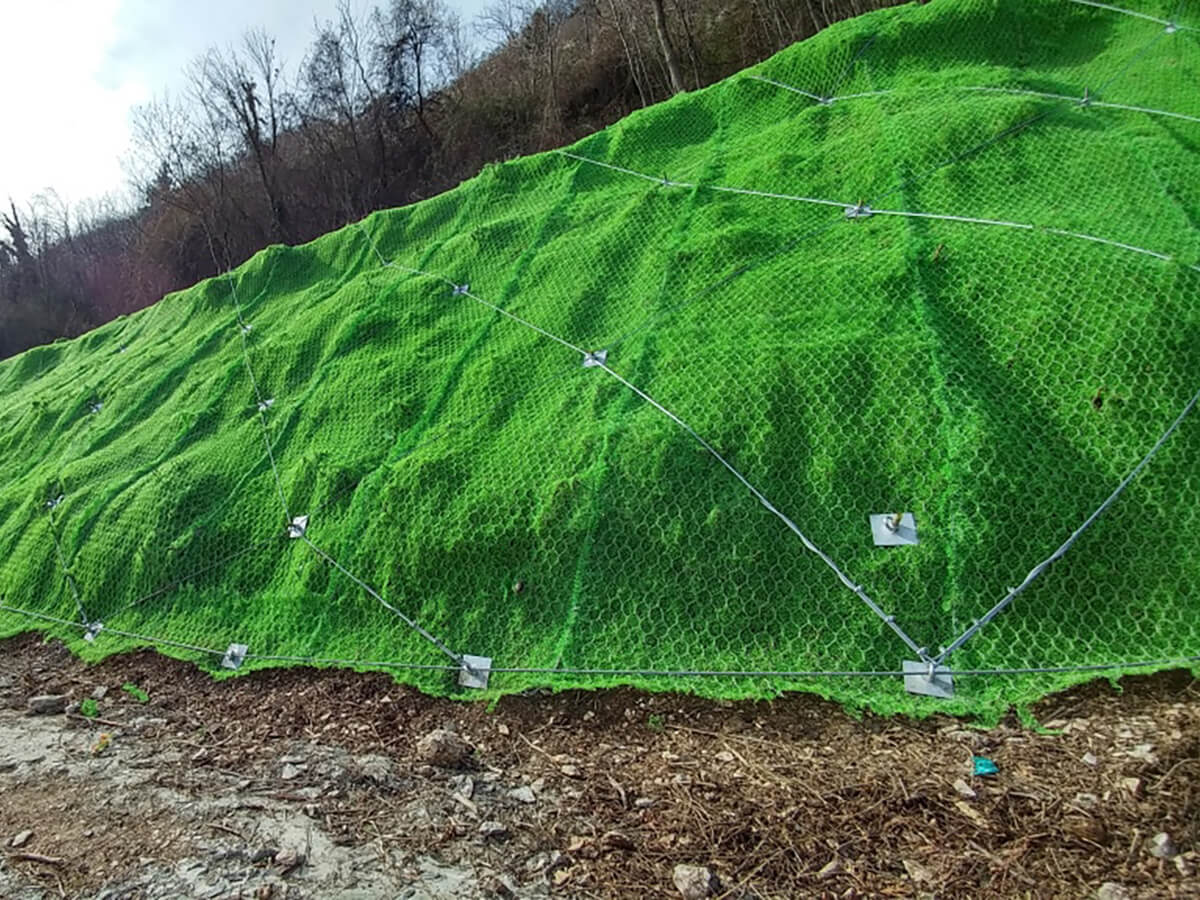
The solution selected was a 3D plastic geomat system, specifically EM4 grade (four-layer structure, thickness ≥14 mm, tensile strength ≥2.0 kN/m), installed across the entire slope surface.
What Is a 3D Geomat?
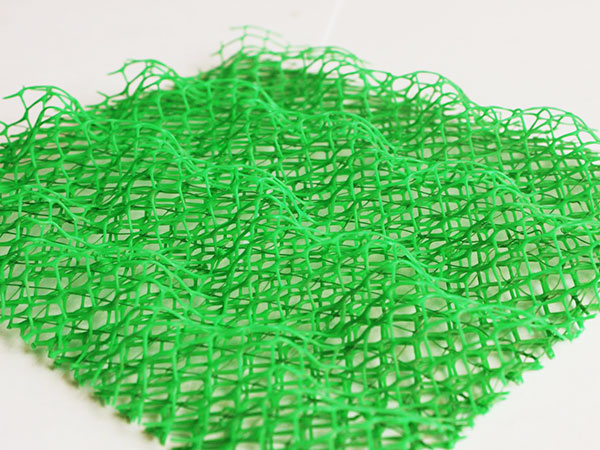
A 3D geomat is a multi-layer, three-dimensional erosion control mat made from thermoplastic resin. It consists of:
-
A bottom layer of bidirectional stretched planar mesh (provides strength and dimensional stability)
-
Upper layers of non-stretched extruded mesh (create a bulky, open structure)
-
The layers are spot-welded together to form a stable, three-dimensional mattress
The mat is typically black and has a porous structure that retains soil and seeds while allowing water and roots to penetrate.
Key Technical Specifications (EM4)
| Parameter | Value |
|---|---|
| Layers | 4 |
| Thickness | ≥14 mm |
| Mass per unit area | ≥350 g/m² |
| Tensile strength (MD/CD) | ≥2.0 kN/m |
| Width | 1–2 m |
| Length | 30–50 m |
How It Works
The 3D geomat works through mechanical confinement and vegetation reinforcement:
-
Soil Retention: The open, three-dimensional structure traps soil particles and seeds, preventing them from being washed away by runoff.
-
Erosion Control: The mat absorbs the kinetic energy of raindrops and surface flow, reducing erosion force at the soil surface.
-
Vegetation Establishment: The mat provides a stable microenvironment for seed germination. Roots grow through the mat and anchor into the underlying soil.
-
Composite Reinforcement: As vegetation matures, roots intertwine with the mat, forming a green composite layer that is far more erosion-resistant than either vegetation or mat alone.
Installation Process
Step 1: Slope Preparation
The slope surface was cleared of loose rocks and debris. Localized depressions were filled to ensure a smooth, uniform surface.
Step 2: Geomat Placement
The geomat rolls were laid from the top of the slope downward, with a minimum overlap of 5 cm between adjacent rolls. The mat was secured using U-shaped anchors (typically 8–10 per square meter on steep slopes).
Step 3: Soil Filling
A fertile soil mixture was spread over the mat, filling the three-dimensional cavities. The soil layer was slightly higher than the mat surface.
Step 4: Hydroseeding
A mixture of native grass seeds, shrubs, and organic fertilizer was applied via hydroseeding. The seed mix was selected for drought tolerance, rapid establishment, and deep root systems.
Step 5: Curing and Maintenance
The slope was watered regularly during the first 8 weeks. After vegetation established, maintenance was reduced to seasonal inspections.
Results & Benefits
Erosion Control Performance
| Parameter | Before Geomat | After Geomat (6 months) | Improvement |
|---|---|---|---|
| Soil loss (ton/ha/year) | 12.5 | 2.1 | 83% reduction |
| Vegetation coverage | 15% (natural) | 85% | +70 percentage points |
| Runoff velocity | High | Low | Significant reduction |
| Gully formation | Frequent | None observed | Eliminated |
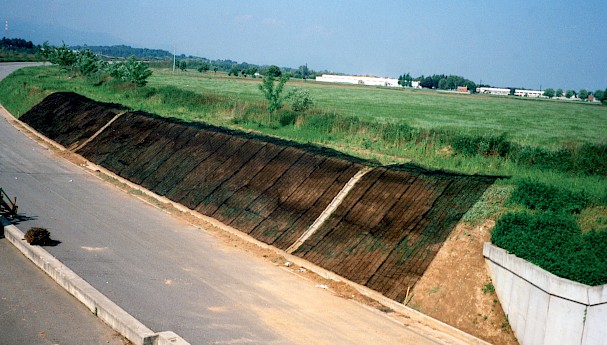
The geomat-reinforced slopes showed almost no soil washout even during the first rainy season after installation. The three-dimensional structure effectively dissipated runoff energy and held the soil in place.
Vegetation Establishment
-
Vegetation density: 4,000–5,500 kg/ha (over 200% higher than traditional seeding)
-
Species diversity: Native grasses, legumes, and shrubs established successfully
-
Root penetration: Roots were observed growing through the mat and into the underlying soil within 3 months
-
Long-term survival: After 12 months, vegetation coverage remained above 90%, with no signs of slope instability
Cost and Carbon Benefits
| Metric | Traditional Solution (Stone Pitching) | Geomat Solution | Savings |
|---|---|---|---|
| Material cost | High | Moderate | ~30% |
| Construction time | 2–3 months | 3–4 weeks | ~70% faster |
| Carbon footprint | High (cement, transport) | Low (plastic + local soil) | ~80% reduction |
| Maintenance cost | Moderate to high | Low | Significant long-term savings |
The geomat solution eliminated the need for imported stone and concrete, drastically reducing transportation-related emissions and site disturbance.
Ecological and Landscape Benefits
-
Visual integration: The slope blended naturally with the surrounding landscape within 6 months
-
Biodiversity support: The vegetation provided habitat for local insects and small animals
-
No negative impact on nature reserve: The project met all environmental requirements
-
Sustainable performance: The mat is designed to remain functional for decades, with vegetation providing additional long-term reinforcement
Real-World Validation
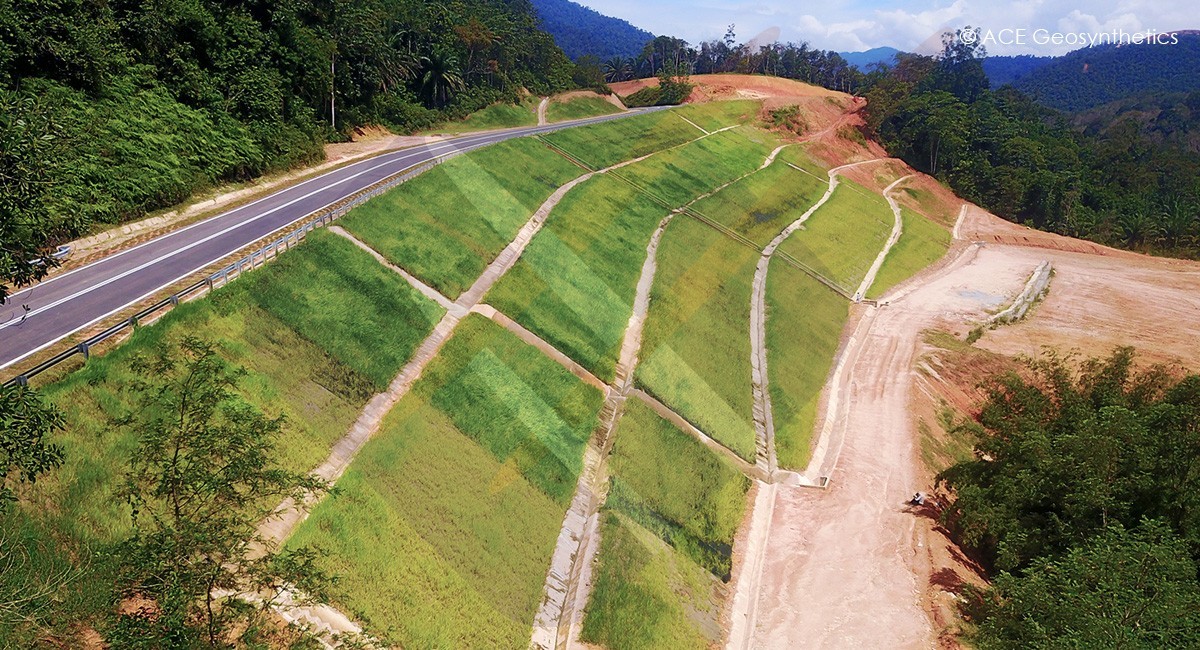
The results from this project align with documented performance from other geomat applications:
-
A 2025 study on the Bukhara-Miskin railway in Uzbekistan reported 80% erosion reduction and vegetation density of 4,000–5,500 kg/ha using geomat systems.
-
Multiple highway projects in China have reported similar outcomes, with geomat-reinforced slopes achieving over 85% vegetation coverage within the first growing season.
Conclusion
Three-dimensional geomats offer a proven, cost-effective, and environmentally sound solution for slope greening and soil conservation. By combining immediate erosion protection with long-term vegetation reinforcement, they address the limitations of both traditional hard engineering and simple revegetation.
Key takeaways from this case study:
-
Erosion reduction of over 80% compared to unprotected slopes
-
Vegetation density over 200% higher than traditional seeding methods
-
Significant cost and carbon savings compared to concrete or stone solutions
-
Rapid construction with minimal site disruption
-
Long-term ecological integration that meets environmental requirements
For engineers, project owners, and environmental specialists facing the challenge of stabilizing steep slopes in sensitive areas, 3D geomats provide a reliable, sustainable, and aesthetically compatible solution.
For more information on our 3D geomat product range (EM2–EM5) and technical support for your slope protection project, please visit wordmaterial.com or contact our engineering team.