
The Growing Challenge of Railway Slope Stability
Railway embankments and cuttings are critical infrastructure assets that face continuous threats from environmental forces. Wind and rainfall erosion can compromise slope integrity, leading to soil loss, slope instability, and potentially catastrophic failures that disrupt rail operations and threaten safety. A study in the UK revealed that 74% of geotechnical failures on road and rail networks are linked to drainage issues as the root cause.
Traditional slope protection methods—stone pitching, concrete lining, and vegetation alone—have proven insufficient to address the growing challenges posed by extreme weather events, heavier axle loads, and the expansion of rail networks into challenging terrain.
This is where modern geosynthetic solutions are transforming railway slope protection. From high-strength geogrids and geocells to erosion control mats and hybrid reinforced soil systems, geosynthetics are enabling steeper, more stable, and more sustainable railway slopes than ever before.
Key Geosynthetic Solutions for Railway Slopes
1. Geogrids: Reinforcement and Stability
Geogrids provide tensile reinforcement within soil masses, significantly improving slope stability. They are used in:
-
Reinforced soil slopes (RSS) : Geosynthetic reinforcements are integrated with soil to enhance stability and accommodate steep slope designs. This approach offers a sustainable and cost-effective solution for soil retaining structures in challenging geotechnical conditions.
-
Embankment reinforcement: In areas with soft soil subgrades, geogrids improve slope stability and reduce settlement risk.
-
Erosion control: Combined with vegetative soil, geogrids provide effective erosion control and slope stabilization.
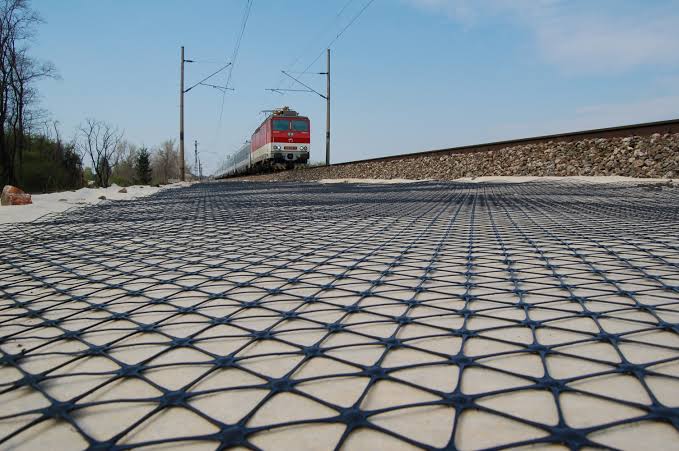
Geocells provide effective railway slope reinforcement through their unique three-dimensional honeycomb structure. Key benefits include:
Soil retention on steep slopes: Geocells confine fill material, preventing erosion and maintaining slope integrity.
Superior reinforcement: Studies have shown that geocell reinforcement can significantly reduce axial deformation, with geocells demonstrating better performance than geogrids in certain applications.
Lateral movement control: Geocell reinforcement controls lateral movement of subballast and settlement, and prevents erosion of embankment slopes.
Geomats provide surface protection from wind and rain, enhancing the structural stability of newly cut slopes. Research from a 2025 study on the Bukhara-Miskin railway section in Uzbekistan demonstrated remarkable results:
Reinforced slopes showed almost no soil washout
Vegetation density reached 4,000–5,500 kg/ha—over 200% higher than traditional seeding
Effective drainage is critical for slope stability. Geocomposite drainage layers are increasingly replacing traditional crushed stone drainage layers. A proven geocomposite drainage system has achieved:
Full consolidation in 25% of the time compared to traditional methods
Enables use of wet fill material that would otherwise be unsuitable for embankment construction
Allows greater use of site-won fill, minimizing earthworks movements
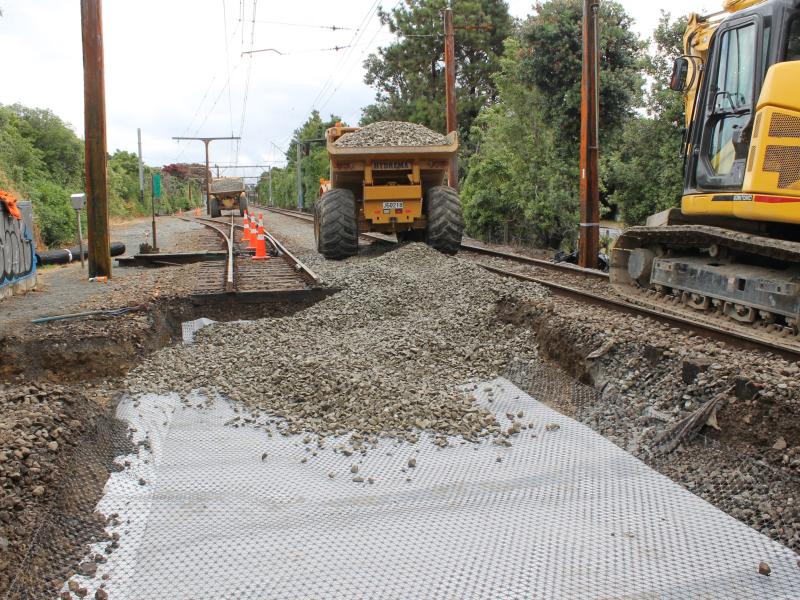
Geotextiles serve essential functions in railway slope protection:
Filtration: Preventing soil migration while allowing water to pass
Separation: Preventing intermixing of different soil layers
Protection: Acting as a cushion between materials, such as in drainage systems where geotextile wraps PVC drainage pipes
Modern railway projects increasingly employ hybrid approaches that combine multiple geosynthetic technologies. The construction of a hybrid reinforced soil slope integrates geosynthetic reinforcements with gabion facia, secondary reinforcement, and green facia for soil retention, combined with cut slope stabilization using soil nailing techniques. This approach offers:
Uniform pressure distribution
Effective mitigation of differential settlement due to its flexible and monolithic nature
Eco-friendliness, seamlessly blending with the surrounding environment
The Dedicated Freight Corridor Corporation of India (DFCCIL) project near Muzaffarnagar, Uttar Pradesh, sought a modern, cost-efficient, and environmentally sustainable method to protect embankment slopes from erosion caused by rainfall and wind. The solution combined geogrid and geocell with vegetative soil as an effective alternative for erosion control and slope stabilization. This innovative approach demonstrated that geosynthetics could replace traditional methods such as stone pitching and concrete lining, which had proven insufficient.
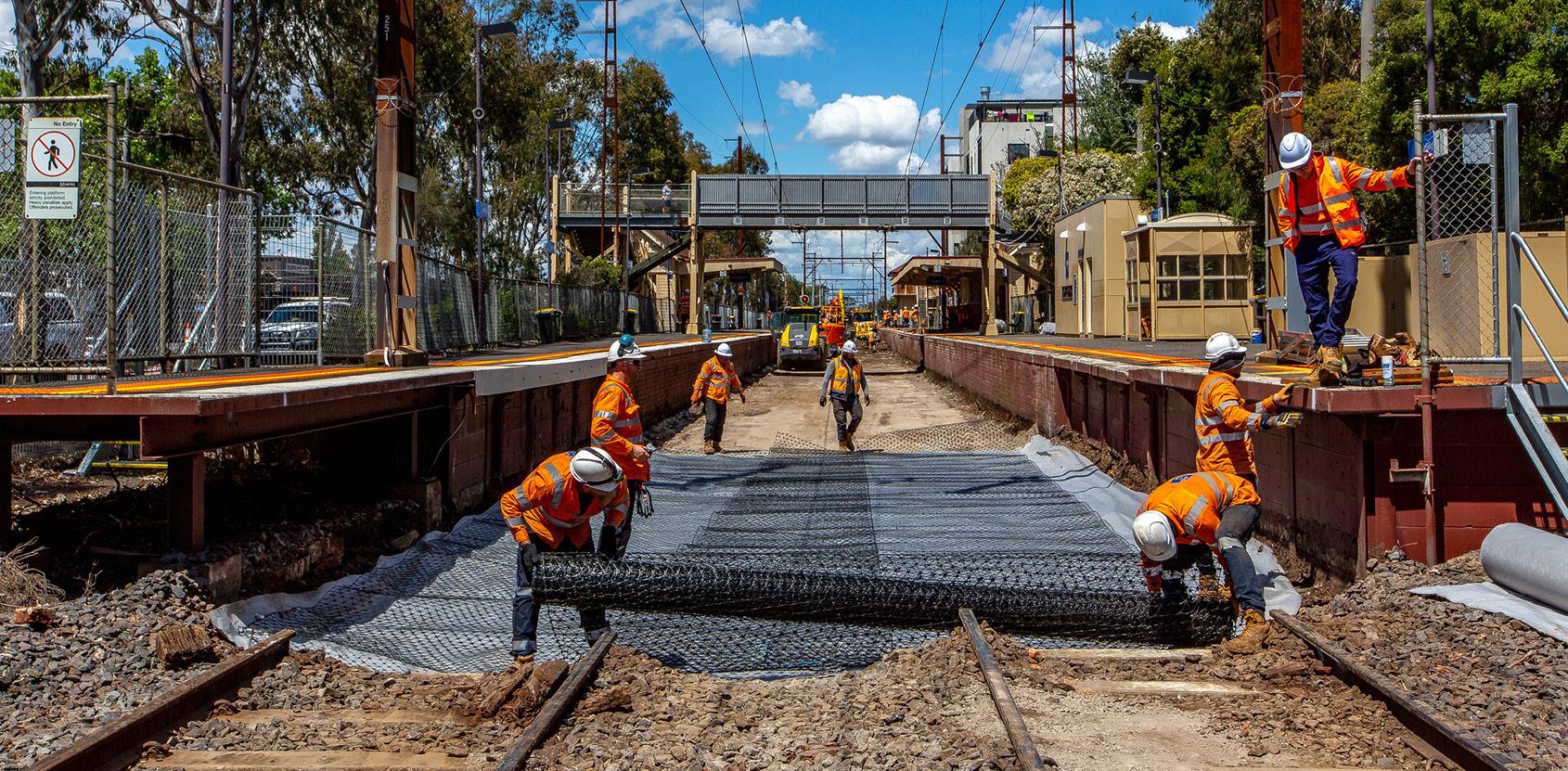
A shored reinforced soil embankment solution for a North Indian railway project won the GeoAsia8 conference Corporate Case Study competition in 2025. Working on the challenging terrain of the Jammu-Baramulla railway line in the Jammu-Kashmir area—a rugged area vulnerable to soil erosion and earthquakes—Maccaferri focused on a 54km section of the 324km route. The project involved:
Massive earthworks and extensive construction of tunnels, bridges, and embankments
Reinforced soil embankments with steeper slopes to minimize land use and topographic changes
Carbon emissions reduced by up to 80% and overall costs by up to 30%
A comprehensive 2025 study on the Bukhara-Miskin railway section in Uzbekistan integrated field experiments and modeling to assess erosion mechanisms and the effectiveness of geosynthetic geomats for slope protection. The study evaluated geomat performance by slope stability, vegetation density, and runoff resistance. The results were striking:
The study concluded that geomats offer a reliable, cost-effective, and sustainable solution for long-term railway slope stability.
The Udhampur-Srinagar-Baramulla Rail Link (USBRL) project in Jammu and Kashmir represents one of the tallest reinforced soil embankments ever constructed for a railway. The project involved a hybrid reinforced soil slope with gabion facia, integrated secondary reinforcement, and green facia for soil retention, combined with cut slope stabilization using soil nailing techniques. This approach:
Provided uniform pressure distribution and effective mitigation of differential settlement
Offered eco-friendliness, seamlessly blending with the surrounding environment
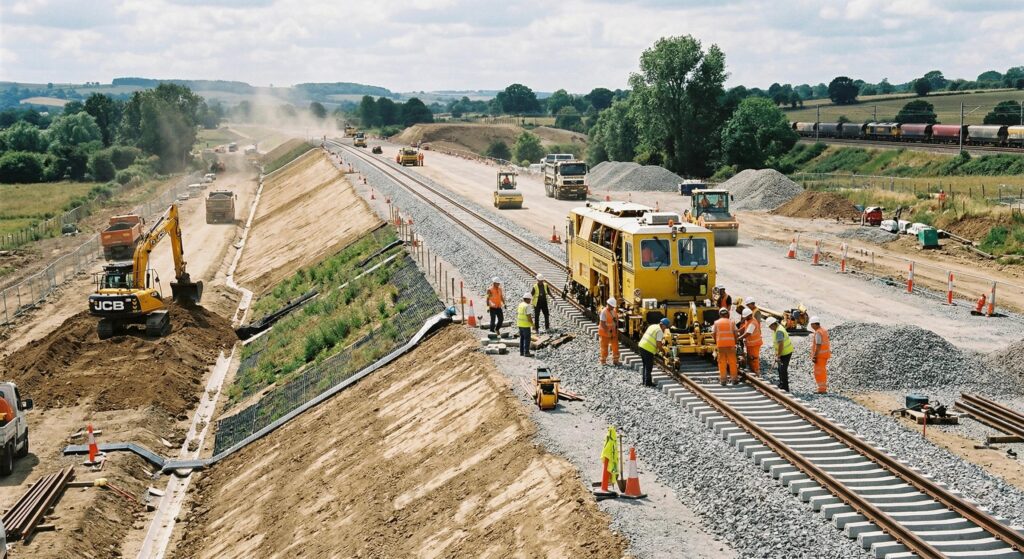
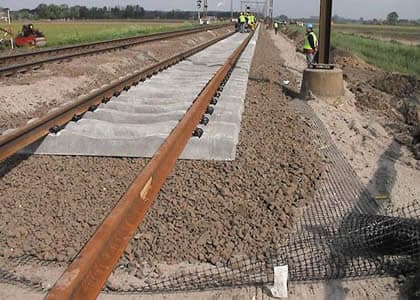
The multiline railway slope in Groenekan, Utrecht, faced erosion and instability challenges due to poor vegetation and soil conditions. A geosynthetic erosion control system was implemented, covering approximately 11,000m². The chosen solution was a geocomposite combining a soil retention artificial root structure with an integrated geogrid. This approach successfully stabilized the slopes against surface erosion on both sides of the heavily used multiline railway.
The growing application of geosynthetics in railway engineering has prompted the development of dedicated standards. In China, TB/T 3618.4-2025《铁路工程土工合成材料 第4部分: 土工布》was released on October 30, 2025, and will take effect on May 1, 2026, replacing previous fragmented enterprise standards.
Additionally, the China Railway Society has developed technical regulations for geosynthetic applications in railway subgrades, covering:
Foundation treatment
Reinforced embankments
Reinforced soil retaining walls
Subgrade reinforcement and treatment
Subgrade protection
Subgrade drainage
These standards provide engineers with clear guidance on selecting, specifying, and installing geosynthetic materials for railway applications, ensuring consistency and quality across projects.
The adoption of geosynthetics in railway slope protection delivers substantial benefits:
Reduced carbon emissions: The Jammu-Baramulla project achieved up to 80% reduction in carbon emissions
Material reuse: 300,000m³ of tunnel muck was reused as structural fill
Biodiversity support: Green fascia and vegetation systems encourage natural growth
Enhanced vegetation: Over 200% higher vegetation density compared to traditional methods
Faster construction: Consolidation achieved in 25% of the time compared to traditional methods
Reduced material imports: Less vehicle movements and lower transport costs
Lower maintenance costs: Enhanced stability reduces ongoing maintenance requirements
2. Geocells: Three-Dimensional Confinement
3. Erosion Control Mats (Geomats)
4. Geocomposite Drainage Systems
5. Geotextiles: Filtration and Separation
6. Hybrid Reinforced Soil Systems
Real-World Case Studies
Case Study 1: Eastern Dedicated Freight Corridor, India
Case Study 2: Jammu-Baramulla Railway Line, India (GeoAsia8 Winner)
Case Study 3: Bukhara-Miskin Railway, Uzbekistan
Case Study 4: USBRL Rail Link Project, Jammu & Kashmir
Case Study 5: Groenekan Multiline Railway, Netherlands
New Industry Standards and Guidelines
Environmental and Economic Benefits
Environmental Benefits
Economic Benefits
Geosynthetics are transforming railway slope protection from a costly, material-intensive challenge into an efficient, sustainable engineering solution. From the deserts of Uzbekistan to the mountains of Jammu and Kashmir, documented projects demonstrate that:
Geomats reduce erosion by up to 80% and enable vegetation growth over 200% denser than traditional methods
Geogrid and geocell systems provide effective, cost-efficient alternatives to stone pitching and concrete lining
Hybrid reinforced soil slopes achieve steeper profiles while minimizing land use and environmental impact
Geocomposite drainage systems achieve consolidation in 25% of the time of traditional methods
Comprehensive projects have achieved up to 80% carbon reduction and 30% cost savings
For railway engineers, project owners, and infrastructure developers, geosynthetics offer a proven, cost-effective, and sustainable path forward for protecting railway slopes against the growing challenges of climate change, heavier loads, and expansion into challenging terrain.
For more information on our geosynthetic product range for railway applications, including geogrids, geocells, geotextiles, and erosion control systems, please visit wordmaterial.com or contact our technical team.
Conclusion