
Market Overview
The global geosynthetics market is experiencing robust expansion, driven by accelerating infrastructure development, tightening environmental regulations, and continuous material innovation. Industry analysts project the market will grow from approximately USD 16.87 billion in 2025 to USD 29.47 billion by 2032, representing a compound annual growth rate (CAGR) of 8.29%. Other forecasts suggest even more optimistic trajectories, with some estimates placing the market at USD 48.44 billion by 2034 at a CAGR of 10.66%
Asia-Pacific dominates the global geosynthetics market, accounting for 44.36% of 2025 revenue with a projected regional CAGR of 9.70%—the fastest among all regions.
Several factors drive this growth:
China: Under its 14th Five-Year Plan, significant funding has been earmarked for transportation infrastructure. Provincial mandates now stipulate geogrid reinforcement for expressways to mitigate post-construction settlement. China is forecast to grow at an exceptional 12.2% CAGR, reaching a projected market size of USD 6.2 billion by 2032.
India: Under its National Infrastructure Pipeline, substantial investments are standardizing geotextile separation layers in rural road upgrades.
Southeast Asia: Public-works agencies are increasingly embedding polymer-based soil-stabilization layers into expressway embankments.
The U.S. market is estimated at USD 4.5 billion in 2025, while Germany is forecast to grow at approximately 5.6% CAGR within Europe.
Regional Growth: Asia-Pacific Leads the Charge
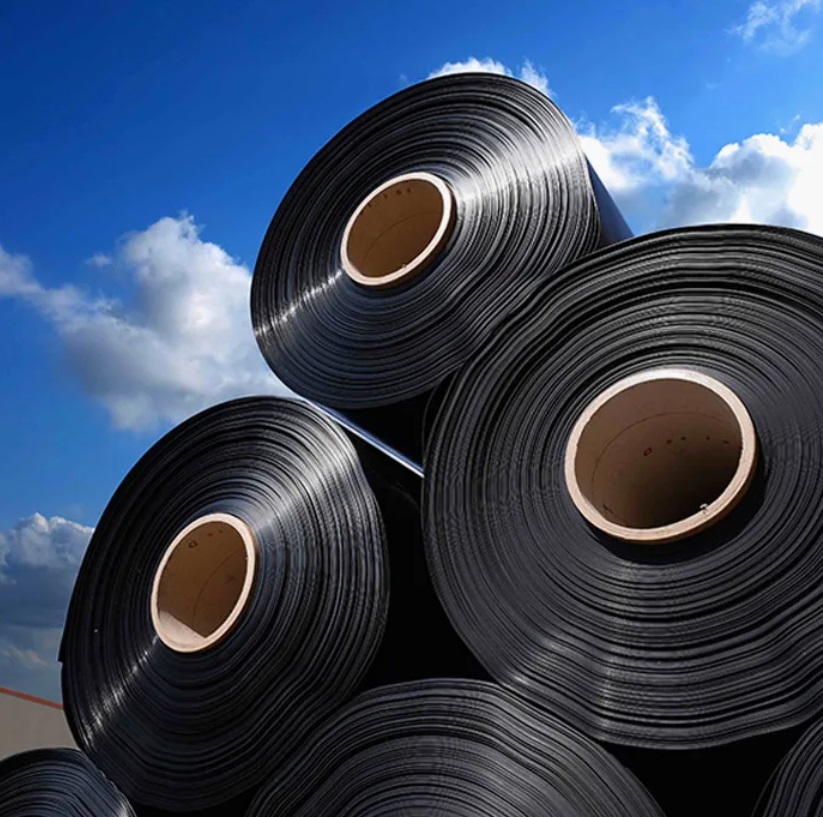
By product type, geomembranes captured 34.68% of 2025 revenue and are advancing at a 10.15% CAGR—outpacing all other product categories. This growth reflects the increasing adoption of geomembranes in landfill liners, mining containment, and water conservation systems.
Geogrids are also experiencing significant acceleration, driven by:
Extreme weather adaptation: As climate change intensifies, demand for geogrid applications to address soil stabilization, flooding, and erosion control is rising.
Infrastructure spending: “The global demand for geogrids is increasing by leaps and bounds due to increasing infrastructure development,” notes Sam Bhat, CTO Geosynthetics for Titan Environmental Containment Ltd.
By function, reinforcement retained the largest 2025 share at 31.58%, while containment and barrier applications posted the fastest growth, accelerating at a 9.14% CAGR.
By material, polypropylene, polyethylene, and polyester collectively held 93.51% of the market share in 2025 and are forecast to expand at an 8.80% CAGR through 2031
Product Segments: Geomembranes Outperform, Geogrids Accelerate
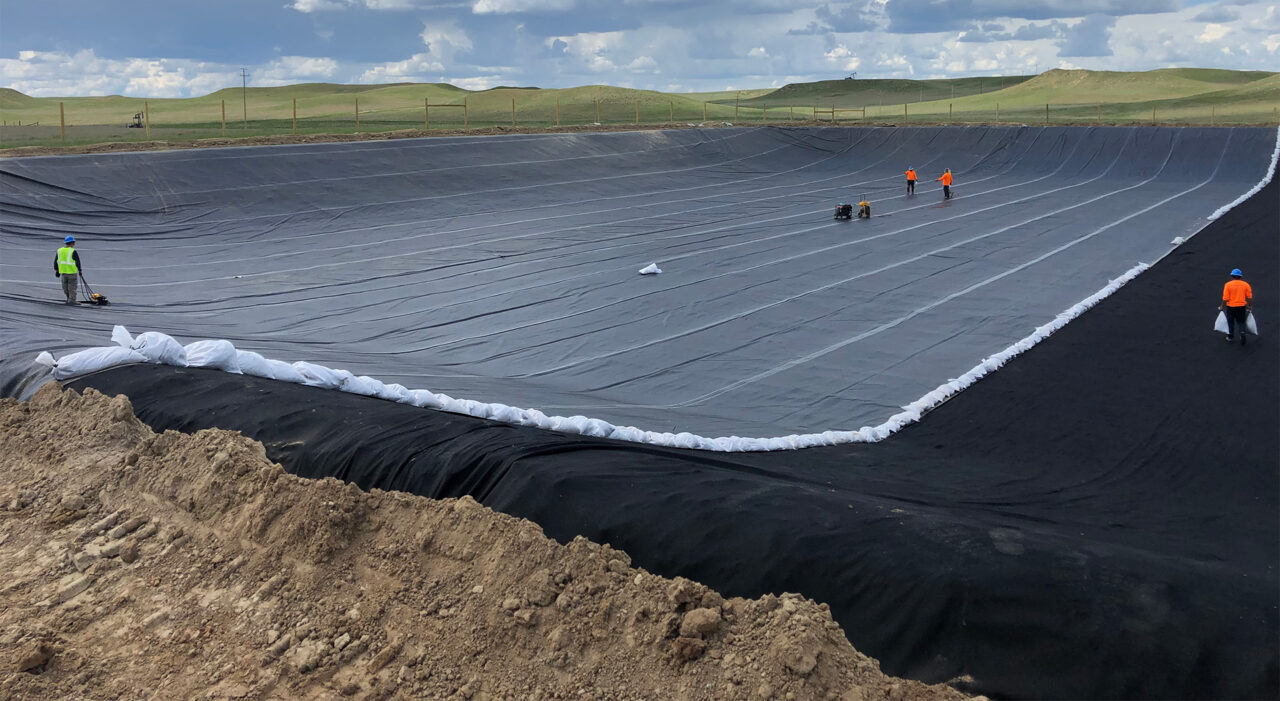
Large-scale infrastructure development—including roads, railways, and airports—serves as the main driver of economic expansion in emerging economies, with geosynthetics used for soil stabilization, reinforcement, and drainage applications. Geogrids and geotextiles lower earthwork volumes, shorten construction schedules, and reduce lifecycle greenhouse-gas footprints compared with aggregate-intensive designs.
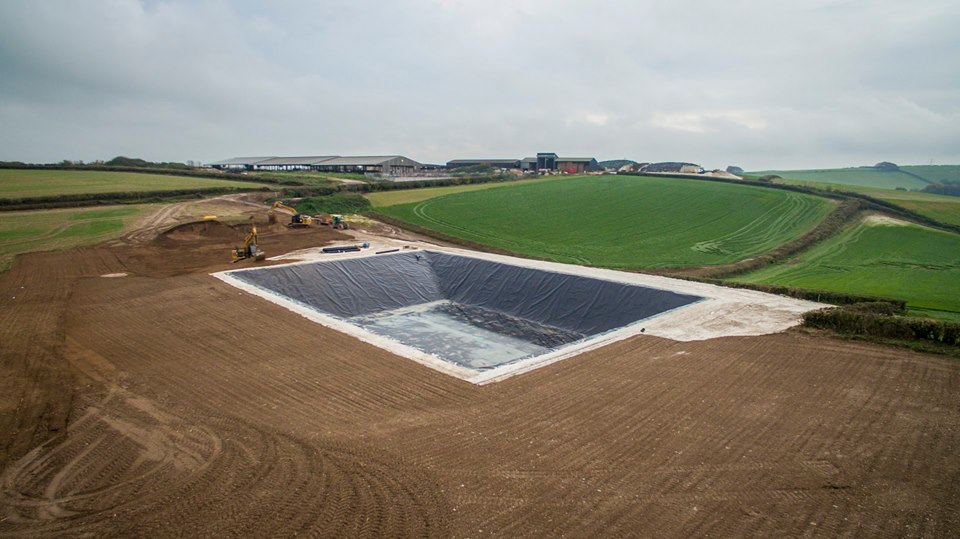
Environmental regulations are accelerating adoption, particularly in landfill liners, mining containment, and water conservation systems, as geosynthetics reduce material usage and improve lifecycle performance. Mandatory landfill and wastewater containment requirements are driving growth in North America and the European Union, with expansion into APAC urban centers.
Notably, the Geosynthetic Institute (GSI) is transitioning from Folsom, Pa., to the campus of Georgia Institute of Technology in Atlanta, reinforcing the academic and research foundation of the industry.
Innovations in polymer chemistry have led to geosynthetics with enhanced strength, durability, and resistance to environmental degradation. The incorporation of UV stabilizers and antioxidants in geotextiles and geomembranes has improved longevity in harsh conditions.
Emerging trends include:
Smart geosynthetics: Embedded fiber-optic strain sensors and RFID tags are shifting procurement criteria from unit price to long-term monitoring value.
Recycled and lower-carbon polymers: Sustainability mandates are driving increased interest in recycled-content options, accelerating product reformulation and third-party verification.
Digital integration: Design-for-manufacture approaches and building information modeling (BIM) integration are streamlining the specification-to-installation pathway.
Nearshoring: Regional manufacturing investments are becoming more prominent as owners seek shorter lead times and improved quality control.
The industry has seen significant merger and acquisition activity. Notable consolidations include:
Solmax bringing in TenCate and Propex
Berry Global Group Inc. joining with Glatfelter to become Magnera
Hanes Geo Components buying Terrafix® Geosynthetics and Nilex Inc.
Ferguson acquiring GeoSolutions
Core & Main Inc. acquiring Earthsavers Erosion Control LLC and others
On the innovation front, AGRU America has developed an Integrated Drainage System (IDS) that replaces earlier, more expensive soil/aggregate drainage layers by combining a structured geomembrane with a geotextile overlay. The system offers improved shear strength, long-term drainage performance, reduced material requirements, and shorter installation time—addressing a key concern for engineers concerned about landfill stability.
PFAS prevention is also emerging as a critical innovation area. The EPA has set stringent regulations on PFAS requirements, prompting significant investment in solutions to prevent PFAS migration from geosynthetic composite lining systems
Key Growth Drivers
1. Infrastructure-Led Construction Boom
2. Environmental Regulations and Sustainability Mandates
3. Technological Advancements
Industry Consolidation and Innovation
Major players identified as market leaders include:
Emerging startups and SMEs with strong footholds in specialized niche areas include Concrete Canvas Ltd. (UK), SKAPS Industries (US), TechFab India Industries Ltd. (India), and Geofabrics Australasia Pty Ltd. (Australia).
Several transformative shifts are redefining how geosynthetic materials are specified, supplied, and installed:
Performance-based specifications: Procurement is shifting toward performance-based specifications rather than prescriptive product lists, rewarding suppliers that can demonstrate validated, repeatable outcomes.
Carbon accountability: Rising emphasis on circularity and carbon accountability is influencing procurement language, prompting designers to weigh recycled-content options and end-of-life scenarios.
Regulatory alignment: Standardized test methods, certification pathways, and clearer acceptance criteria for recycled-content products are gathering pace.
Climate resilience: As extreme weather becomes increasingly common, the demand for geosynthetics in climate adaptation and mitigation applications is rising.
The geosynthetics industry is poised for sustained growth through 2032 and beyond, driven by converging forces of infrastructure investment, environmental regulation, and material innovation. For engineers, contractors, and procurement professionals, staying informed about market trends, emerging technologies, and regulatory developments is essential for making cost-effective, durable, and sustainable material choices.
For more information on our geosynthetic product portfolio and how we can support your next infrastructure project, please visit wordmaterial.com or contact our technical team.
Key Industry Players
Company
Headquarters
Solmax
Canada
Officine Maccaferri Spa
Italy
Tensar International Corporation
US
HUESKER, Inc.
Germany
Naue GmbH & Co. KG
Germany
AGRU America, Inc.
US
Fibertex Nonwovens A/S
Denmark
Thrace Group
Greece
Freudenberg Performance Materials
Germany
Strata Geosystems
India
Outlook: What This Means for Engineers and Procurement Teams
Conclusion